CRM for SaaS companies. Built around how you sell.
A self-serve trial and an enterprise evaluation take different paths. The customer relationship should survive both.
Product-led, with a human handoff.
Connect a signup to its workspace, company and chosen activation milestone. Give sales a reason to reach out, with the context behind the signal. Define what qualifies an account before turning product activity into a sales task.
Sales-led, with product context.
Keep stakeholders, evaluation criteria and commercial terms alongside the opportunity. Carry the agreed outcome into onboarding, then connect usage and subscription context to the account owner.
For a hybrid model, preserve both routes. SYNQ develops custom CRM software and focused extensions around your existing stack. The right starting point may be a better connection between tools.
Turn a SaaS product signal into a clear next step.
Choose the events that deserve attention. Keep their source, timestamp and account context visible so the receiving person can judge what to do.
Shared contextThe account.
Start with the intended outcome.
Product signal
A new workspace begins its trial.
Receiving owner
Onboarding or sales, based on your routing rules.
Next step
Confirm what the account wants to achieve and which milestone would demonstrate value.
Investigate the missing milestone.
Product signal
The agreed activation event has not arrived.
Receiving owner
The person responsible for trial onboarding.
Next step
Check the event feed and customer context, then offer relevant help. Missing activity alone does not explain the cause.
Prepare the renewal conversation.
Commercial signal
The account reaches its agreed review window.
Receiving owner
The account or customer success owner.
Next step
Review outcomes, open issues, stakeholders and current terms before agreeing the next period.
Illustrative workflow. The example changes locally; it does not process customer data.
Define a product-qualified lead using your own qualification rules. A login is an observation. A failed payment needs a billing check. Neither establishes buying intent or churn on its own.
A B2B SaaS CRM needs more than a contact record.
The commercial account
The company, stakeholders, account owner and agreements. One company may have several teams using your product.
The product workspaces
Users, memberships and relevant usage events retain their workspace identity. A user may belong to more than one account.
The billing relationship
Payer, subscription and invoice records remain distinct. The person using the product may not be the buyer or billing contact.
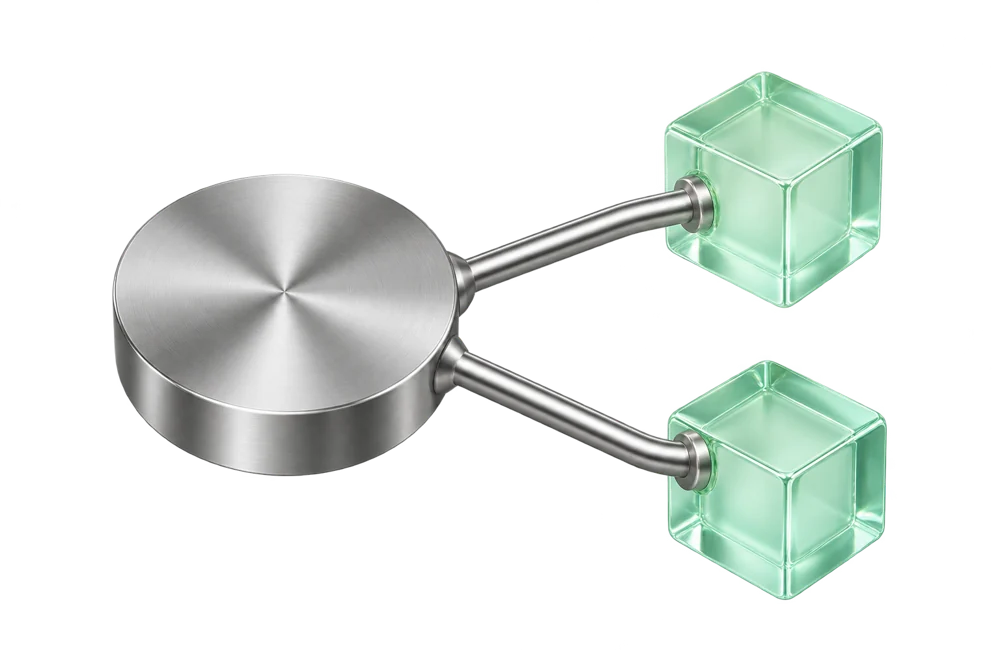
Simplified account model: the two jade blocks represent separate workspaces connected to one account. Billing is linked as its own record, not shown as a workspace.
SaaS CRM integrations with clear responsibilities.
Connect the information your team needs. Decide which system owns each field before allowing updates in both directions.
System
Keeps responsibility for
Shares with the CRM
Product
Workspace identity, memberships and source events.
Selected milestones with timestamps and stable account links.
Billing
Subscriptions, invoices and payment state.
Current commercial context and relevant billing exceptions.
CRM
Stakeholders, opportunities, relationship owners and next actions.
Agreed handoffs and customer context for the receiving team.
Analytics
Agreed metric definitions, cohort logic and reporting models.
Useful account summaries with a defined refresh time.
This is a proposed ownership model, adapted to your systems. Our integration approach starts with API access, permissions and failure handling. Check plan limits and available events before committing to a connection.
A SaaS CRM should remember what you promised.
The deal closes. The relationship continues.
Customer success needs the outcome the customer bought, the people involved and the commitments made. Attach the agreed scope and open decisions to a named receiving owner.
At renewal, bring together the review date, current terms, achieved milestones and unresolved issues. Keep an expansion opportunity separate from the existing subscription so a proposal does not become an assumed commitment.
Agree who maintains recurring-revenue definitions. A CRM sales forecast and recognized revenue answer different questions.
Choose the right CRM approach for your SaaS team.
Test the same customer journey against each option. Custom development needs a clear reason to exist.
Configure what works.
Your CRM already represents accounts, workspaces and handoffs. Adjust fields, stages and access. Check whether the team can maintain the setup.
Connect the missing context.
The core CRM works, but product or billing information arrives late. Build a focused integration and define its owner, monitoring and recovery.
Build around a real gap.
Your account relationships or operational workflow repeatedly exceed the available model. Scope a custom CRM or extension, including migration, exports and ongoing maintenance.
Start your SaaS CRM with one complete lifecycle.
Take an account from signup or opportunity through onboarding to its next review. Agree what a successful handoff looks like at each point.
Resolve identity. Map account, contact, workspace and subscription IDs. Decide how duplicate and merged accounts are handled.
Test the exceptions. Replay duplicate events, late updates and failed transfers. An old event must not silently overwrite a newer decision.
Define access and ownership. Decide who can view or change commercial, support and billing context.
Pilot with the people doing the work. Check receiving owners, exports and recovery before broadening the scope.
Compare the full cost: configuration, licenses, migration, integration, hosting and future changes. Budget and delivery scope follow the systems and workflows we review together.
CRM for SaaS. Your questions.
Is CRM for SaaS the same as a SaaS CRM?
Here, CRM for SaaS means a customer workflow built for a SaaS company. “SaaS CRM” can also describe any CRM delivered as a cloud subscription. The delivery model alone does not define how it supports product usage, subscription relationships or renewals.
Can it support both product-led and sales-led growth?
That is part of the workflow design. Keep self-serve workspaces and sales opportunities distinct, then agree the account link, qualification rules and receiving owner when a human conversation becomes useful.
Does the CRM replace subscription billing?
Usually the billing system should keep control of subscriptions, invoices and payment state. The CRM receives relevant context for commercial follow-up. We agree the actual responsibility and update direction field by field.
Can we keep our existing CRM and analytics tools?
We assess that first. A configuration change or focused integration may cover the gap. Available APIs, plan limits, permissions and data quality determine what can be connected reliably.
Do we need AI for lead scoring or churn detection?
No. Begin with understandable qualification rules and reliable source data. If a later AI use case is worthwhile, define its evidence, human review and handling of uncertain results before using it to guide action.
What should we bring to the first discussion?
Your current CRM, product analytics and billing stack; one real customer lifecycle; the handoff that causes repeated work; and the team responsible for it. This gives us a concrete starting point for scope and implementation options.
Make the next customer handoff clear.
Show us where product, sales and customer success lose context. We will help define what to configure, connect or build.
With your consent, we load the OpenAI Pixel to measure the effectiveness of our advertising. Identifiers and technical data are sent to OpenAI; processing in the United States is possible. Enabled advanced matching may use hashed contact details for attribution.
You can reject marketing and continue using this website. You can change your choice at any time through ‘Cookie settings’. More about privacy
Customize your choice
Necessary: We store your cookie choice for 180 days and your selected theme preference in your browser.